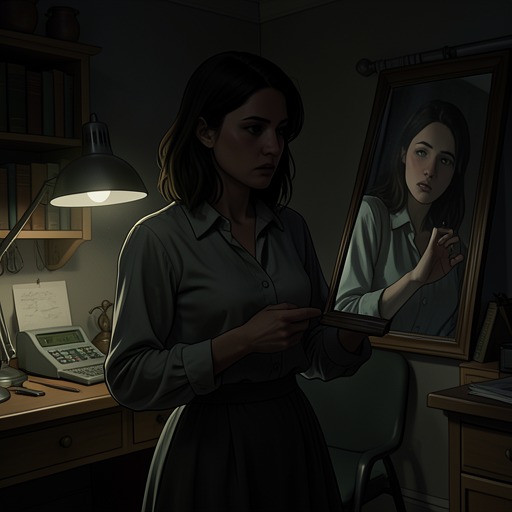
Lucy is released
The Earthquake BirdLucy is released from police custody without charge after photographs and the discovery of Lily Bridges’s actual body unravel the case built against her. The release does not settle who killed Lily: it exposes the danger of treating a plausible confession or an assumed identity as proof, while leaving Teiji’s possible involvement unresolved.
The case against Lucy
The suspicion began with a sequence that seemed to place Lucy at the center of Lily’s disappearance. Lily had been seen at Lucy’s apartment on the night she vanished. A neighbor reported that Lucy spoke angrily to her at the open doorway, then followed her a few minutes later carrying a bundle. Days afterward, a young woman’s torso and matching limbs were recovered from Tokyo Bay. With no hands and therefore no fingerprints, the remains could not be officially identified, but the assumption that they were Lily’s became widely accepted. Lucy herself had also accepted it, a readiness that Kameyama later found unusual in a friend of the presumed victim.
The apparent case against Lucy was not simply a matter of proximity. During questioning, the interval around that night remained blurred in her memory. She cracked her fingers while Kameyama waited, and Oguchi picked at the seam of his trouser knee. Lucy recognized the officers’ discomfort and understood that her silence was obstructing the interview, but she insisted inwardly that she needed to recover events bit by bit before she could tell them. Her difficulty recalling the night preceded the confession that would make the case seem settled.
A confession made under pressure
Lucy eventually gave the police a coherent account of killing Lily. She described jealousy, rage when Lily let her down, and her obsessive attachment to Teiji. In her story, a pair of stockings became the weapon; Lily, still trusting Lucy as a friend, smiled before Lucy caught her off guard. Lucy then described Lily’s brief struggle and the weight of her lifeless body as she dragged it to a hiding place. The narrative’s fluency pleased the police, but Lucy later states plainly that she did not kill Lily: she had spun a story and was exhausted by the effort of resisting arrest.
That account cannot be treated as independent confirmation of the crime. Its emotional logic draws on real relationships and circumstances, but Lucy explicitly identifies the killing as invented. She also doubts her own claim to innocence in a broader moral sense. She believes that if she had answered Lily’s phone call, Lily would not have come to her street that night; she had introduced Lily to Teiji and persuaded her not to return to Britain. Her conclusion, that she is neither entirely guilty nor entirely innocent, distinguishes those regrets from the murder she falsely confessed to committing.
The body and the photographs
Kameyama’s revelation changes the physical facts of the case: Lily’s body had been found the previous night in an unused shed behind a gas station, only minutes from Lucy’s home. Lily had been strangled. The remains from Tokyo Bay were still unidentified; the newspapers’ attribution of them to Lily had been premature. The distinction matters not only because it removes the supposed dismemberment from Lucy’s timeline, but because the recovered body places the murder at a different site and presents a different cause of death.
A day after Lucy’s details appeared in the national newspapers, police received an envelope containing two photographs. One showed Lily at a McDonald’s near Lucy’s home on the night she disappeared, two hours after the neighbor had seen her at Lucy’s door. A cashier recognized Lily and recalled that she and a Japanese man appeared distressed and had difficulty communicating. Lily left her cheeseburger untouched but drank her Coke. This evidence places her alive after the encounter that had seemed to connect Lucy to her disappearance. The police concluded that Lucy’s brief venture outside that evening, with her stockings over one shoulder, had no connection to Lily’s death; Lucy had been out for only about ten minutes, and the neighbor had not reported hearing her leave again.
The second photograph showed a woman pressed within close brown walls, her head lolling and her eyes empty. Neither photograph bore fingerprints. The police did not know that Teiji had taken them, but Lucy believed he had. The images did not prove that Teiji killed Lily; they did, in the police’s assessment, show that Lucy had not. Lucy speculates that Lily may have met Teiji at the restaurant to end their relationship and that he might have killed her afterward, but she recognizes that this is conjecture, not proof. The photographs redirect suspicion without closing the case.
Release without resolution
The case against Lucy was circumstantial, and investigators had found no fingerprints or DNA on Lily’s body. With the new evidence, they released Lucy without charges. The outcome reverses the force of her confession: the authorities do not accept a detailed story as sufficient when the physical and photographic evidence points elsewhere. Yet the release is not a declaration that the killer has been identified, nor does it transform Lucy’s suspicions about Teiji into established fact.
The episode leaves Lucy’s freedom entangled with her exhaustion and self-doubt. Before learning the decision, she had agreed to stay at Mrs. Katoh’s house because she hoped to remain in custody and be convicted. Now that no charges are to be filed, the unresolved evidence offers no equivalent certainty. Lily’s appearance at the restaurant, the second photograph, and Teiji’s possible authorship make him a compelling suspect to Lucy, but none proves his guilt. Lucy’s release therefore resolves the immediate legal question of whether she will be charged while preserving the novel’s harder uncertainty: the difference between an invented confession, an inference that feels inevitable, and what can actually be known.